


Secure 13/16″ Threaded Panel Mount
The U.S. standard 13/16″-28UNS threaded coupling provides stable fixation, preventing loosening caused by vibration or mechanical shock.
IP67 / IP68 Waterproof Protection
Sealed housing and potting options effectively block water, dust, and moisture, ensuring dependable performance in outdoor and industrial environments.
Multiple Receptacle Configurations
Supports female-to-female, PCB back mount, and wired back-mount receptacles, enabling flexible system design and easy installation.
USB 2.0 & USB 3.0 Compatibility
Designed to support different USB standards, meeting both standard data transmission and higher-speed application needs.
Industrial-Grade Materials & Durability
Flame-retardant PA66 housing, brass contacts, and robust construction ensure long service life in demanding applications.
| USB Female to Female Back Mount Receptacle (Threaded) | USB Female Back Mount PCB Receptacle(Threaded) |
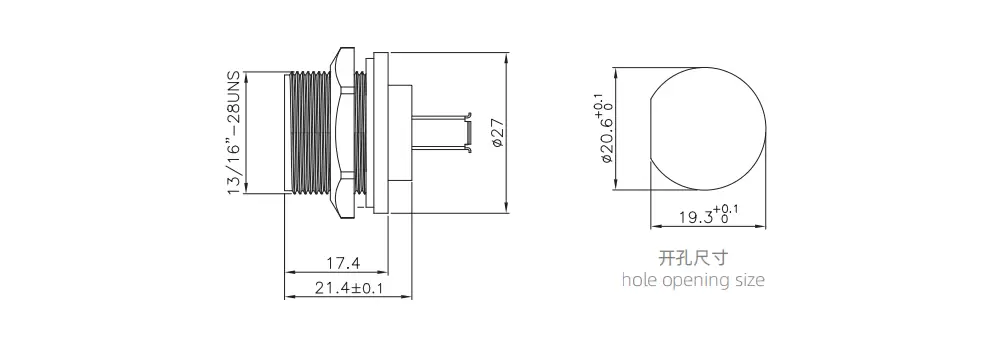 |
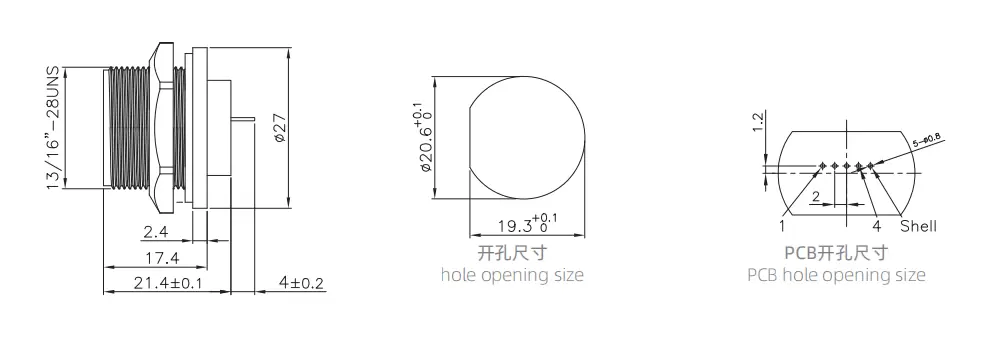 |
| USB Female Back Mount Receptacle with wire(Threaded) | 13/16"-28UNS U.S. standard screw Dust Cover Round Hole Latch Adapts to USB (Threaded) |
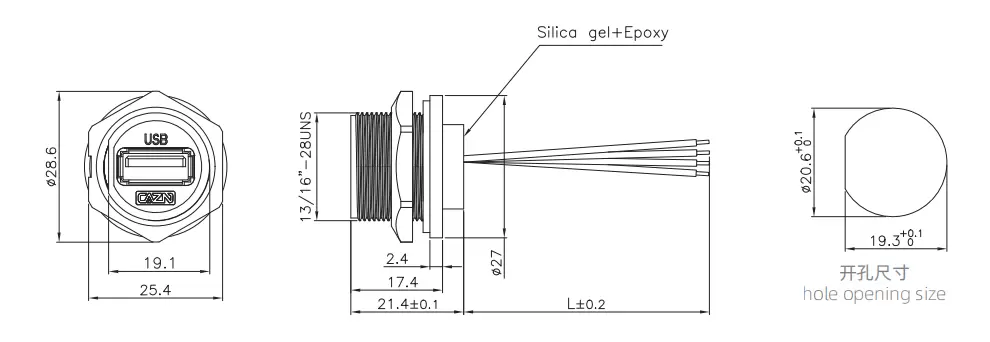 |
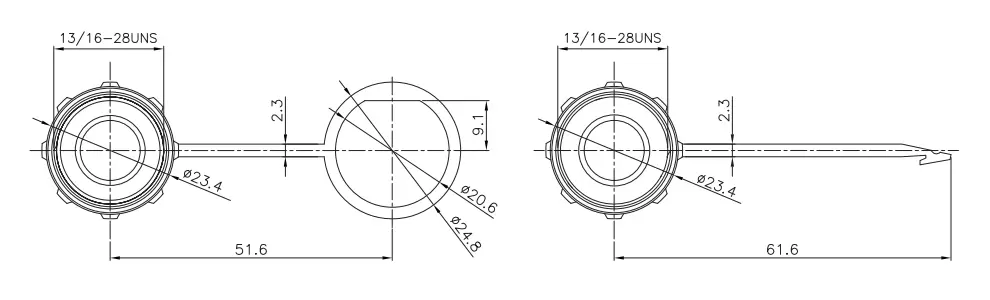 |
| Shell material | Thermoplastic plastic PA66, flame retardant grade: V-0 |
| Contact material | Brass |
| Cable material | PVC |
| Waterproof grade | IP67,IP68 |
| Rated voltage | 30V |
| Rated current | 1.5A |
| Insulation resistance | 2000 mΩ |
| Applicable temperature | -40℃ ~ +105℃ |
| Durability | ≥500(Cycles) |
Industrial control panels and automation cabinets
Outdoor communication and monitoring equipment
Embedded systems requiring sealed USB interfaces
Industrial IoT devices and controllers
Power and data interfaces for harsh environments
Q1: Can this USB receptacle be used outdoors permanently?
Yes. With IP67/IP68 protection, it is suitable for long-term outdoor installations.
Q2: What is the difference between PCB mount and wired versions?
PCB mount versions integrate directly onto circuit boards, while wired versions allow flexible cable routing.
Q3: Does one receptacle support both USB 2.0 and USB 3.0?
The platform supports both standards; the internal configuration is selected according to application needs.
Q4: Is shielding mandatory?
No. Shielding is optional and can be customized based on EMI requirements.


